This Site is for US Patients


HES is a rare disorder
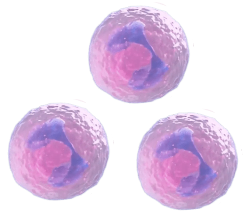
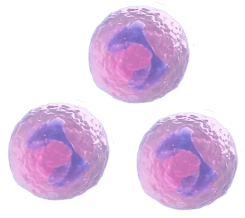
HES is a condition in which high levels of eosinophils—a type of white blood cell—can lead to inflammation, tissue damage, and eventually, organ damage.
Eosinophil levels for patients with HES are often around 10 times normal level.

Learn more about HES and talk to your doctor about treatment options.
You may feel better about your treatment plan and managing the condition.
What are eosinophils, and how are they related to HES?
Eosinophils are white blood cells, a normal part of our immune system. When you have HES, a blood disorder, your body has too many eosinophils.
Having a high number of eosinophils in the blood can eventually lead to tissue and multiple organ damage, as these eosinophils can enter tissues and cause inflammation. HES can affect any organ in the body, including skin, lungs, stomach, GI tract, heart, nerves, joints, blood vessels, and other organs.
The mechanism of action of FASENRA in HES is not fully understood. FASENRA is a biologic treatment approved to treat people 12 years and older with HES.



frequently asked questions
HES is a condition in which high levels of eosinophils—a type of white blood cell—can lead to inflammation, tissue damage, and eventually, organ damage.
Eosinophil levels for patients with HES are often around 10 times normal level.
HES can affect different organs, including skin, lungs, stomach, GI tract, heart, nerves, joints, blood vessels, and other organs. Multiple organs can be affected at the same time, and symptoms will vary depending on which organs are affected.
Each person’s symptoms are unique, however common symptoms can include tiredness, fever, cough, rash, stomach pain, or shortness of breath, and they can change over time and worsen without treatment.
IMPORTANT SAFETY INFORMATION
Do not use FASENRA if you are allergic to benralizumab or any of the ingredients in FASENRA. Do not use to treat sudden breathing problems.
FASENRA may cause serious side effects, including:
- allergic (hypersensitivity) reactions, including anaphylaxis. Serious allergic reactions can happen after you get your FASENRA injection. Allergic reactions can sometimes happen hours or days after you get your injection. Tell your healthcare provider or get emergency help right away if you have any of the following symptoms of an allergic reaction:
- swelling of your face, mouth and tongue
- breathing problems
- fainting, dizziness, feeling lightheaded (low blood pressure)
- rash
- hives
Before using FASENRA, tell your healthcare provider about all of your medical conditions, including if you:
- are taking oral or inhaled corticosteroid medicines. Do not stop taking your corticosteroid medicines unless instructed by your healthcare provider. This may cause other symptoms that were controlled by the corticosteroid medicine to come back
- have a parasitic (helminth) infection
- are pregnant or plan to become pregnant. It is not known if FASENRA will harm your unborn baby. Tell your healthcare provider if you become pregnant during your treatment with FASENRA
- are breastfeeding or plan to breastfeed. It is not known if FASENRA passes into your breast milk. Talk to your healthcare provider about the best way to feed your baby if you use FASENRA
- are taking prescription and over-the-counter medicines, vitamins, or herbal supplements.
Do not stop taking your other medicines unless instructed to do so by your healthcare provider. Tell your healthcare provider if your condition does not get better or if it gets worse after you start treatment with FASENRA.
The most common side effects of FASENRA:
- adults and children 6 years and older with asthma include headache and sore throat
- adults with EGPA include headache
- adults and children 12 years and older with HES include headache, allergic reactions, and flu-like symptoms
These are not all the possible side effects of FASENRA.
APPROVED USE
FASENRA is a prescription medicine used:
- with other asthma medicines for the maintenance treatment of severe asthma in adults and children 6 years and older whose asthma is not controlled with their current asthma medicines. FASENRA is not used to treat sudden breathing problems.
- to treat adults with eosinophilic granulomatosis with polyangiitis (EGPA).
- to treat adults and children 12 years and older with hypereosinophilic syndrome (HES).
Please see full Prescribing Information, including Patient Information and Instructions for Use.
You may report side effects related to AstraZeneca products.


